share
What a School Bus Driver Taught Me About Supply Chains, Systems Thinking, and AI
Yesterday, I watched a school bus driver do something that looked completely wrong. People started shouting. He ignored them. Thirty seconds later, everyone realized he had been right all along. It struck me that I'd just witnessed one of the best demonstrations of systems thinking I've ever seen.
Here's what happened.
I was driving home on a narrow road when a school bus approached from the opposite direction. At one particularly tight section, another car coming towards me became trapped. The rear of the bus was blocking the only space the car needed to move forward. Within seconds, a few motorcyclists behind the car started shouting at the bus driver. "Turn the bus away from the car!"
Honestly, if I had been standing there instead of sitting in my car, I probably would have thought the same thing. From where everyone was watching, the solution looked obvious. But the bus driver did the exact opposite. He slowly turned the front of the bus towards the car.
For a brief moment, it looked like he was making the situation even worse. Then everything clicked. As the front of the bus moved slightly closer, the rear of the bus swung away, creating exactly enough space for the car to pass. Within seconds, the traffic cleared. The people shouting weren't unintelligent. They were simply solving the wrong problem.
The driver wasn't thinking about where the front of the bus should go. He was thinking about where the rear of the bus needed to end up. That difference changed everything.
Counterintutive Behavior of Complex Systems
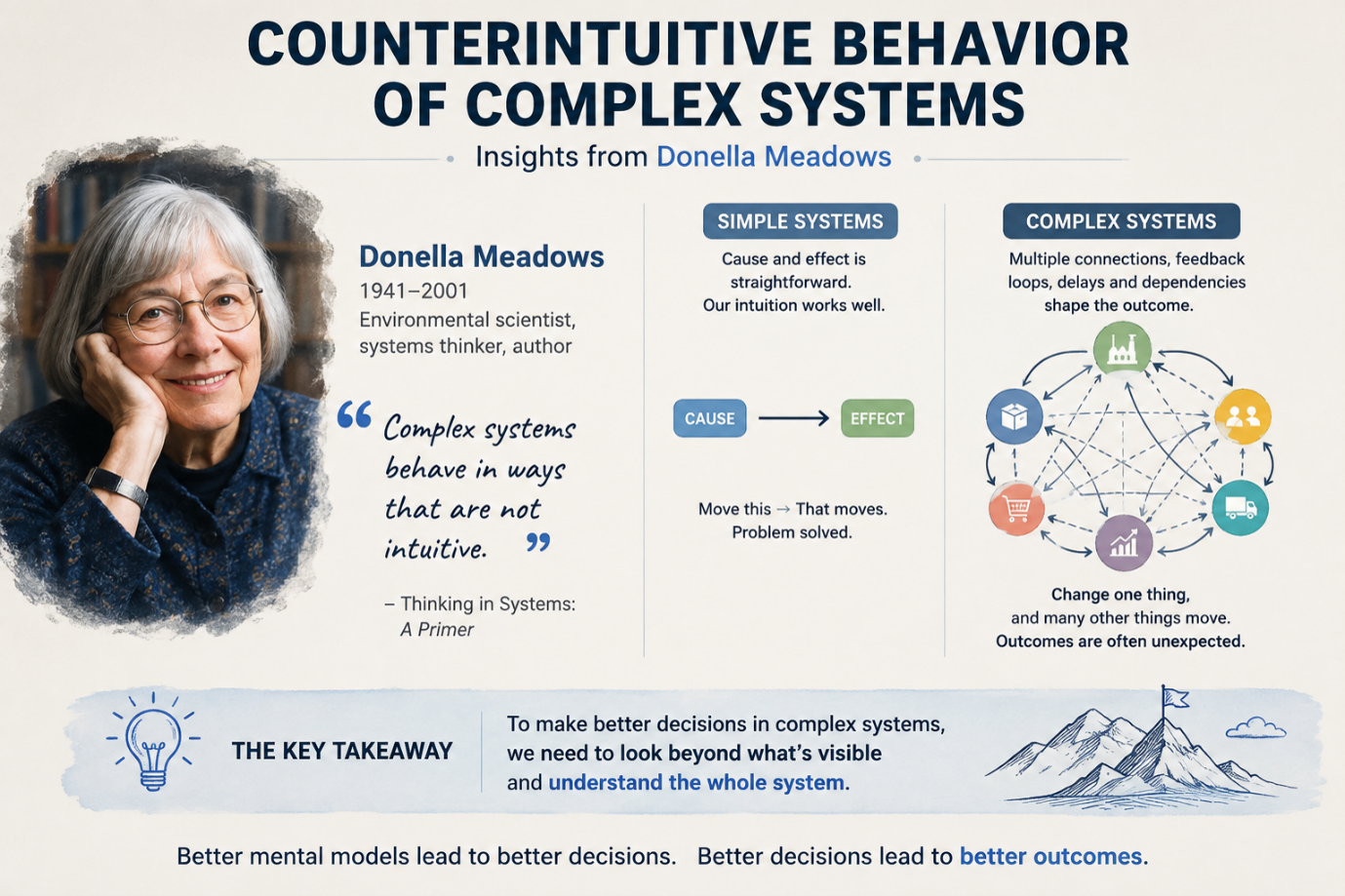
On the drive home, I couldn't stop thinking about what I'd just seen. Later that evening, I came across a concept that perfectly explained it. Donella Meadows, one of the pioneers of systems thinking, described the counterintuitive behaviour of complex systems. Our brains naturally look for simple cause and effect.
Move this. That moves. Problem solved. But complex systems don't work that way.
Every action creates consequences somewhere else through dependencies, delays, feedback loops, and ripple effects. What appears to be the obvious solution often isn't, simply because we're looking at one part of the system instead of the whole. The bus driver wasn't reacting to what everyone else could see. He was reasoning about what would happen next. The more I thought about it, the more it reminded me of supply chains.
Supply Chain: An Interconnected Ecosystem
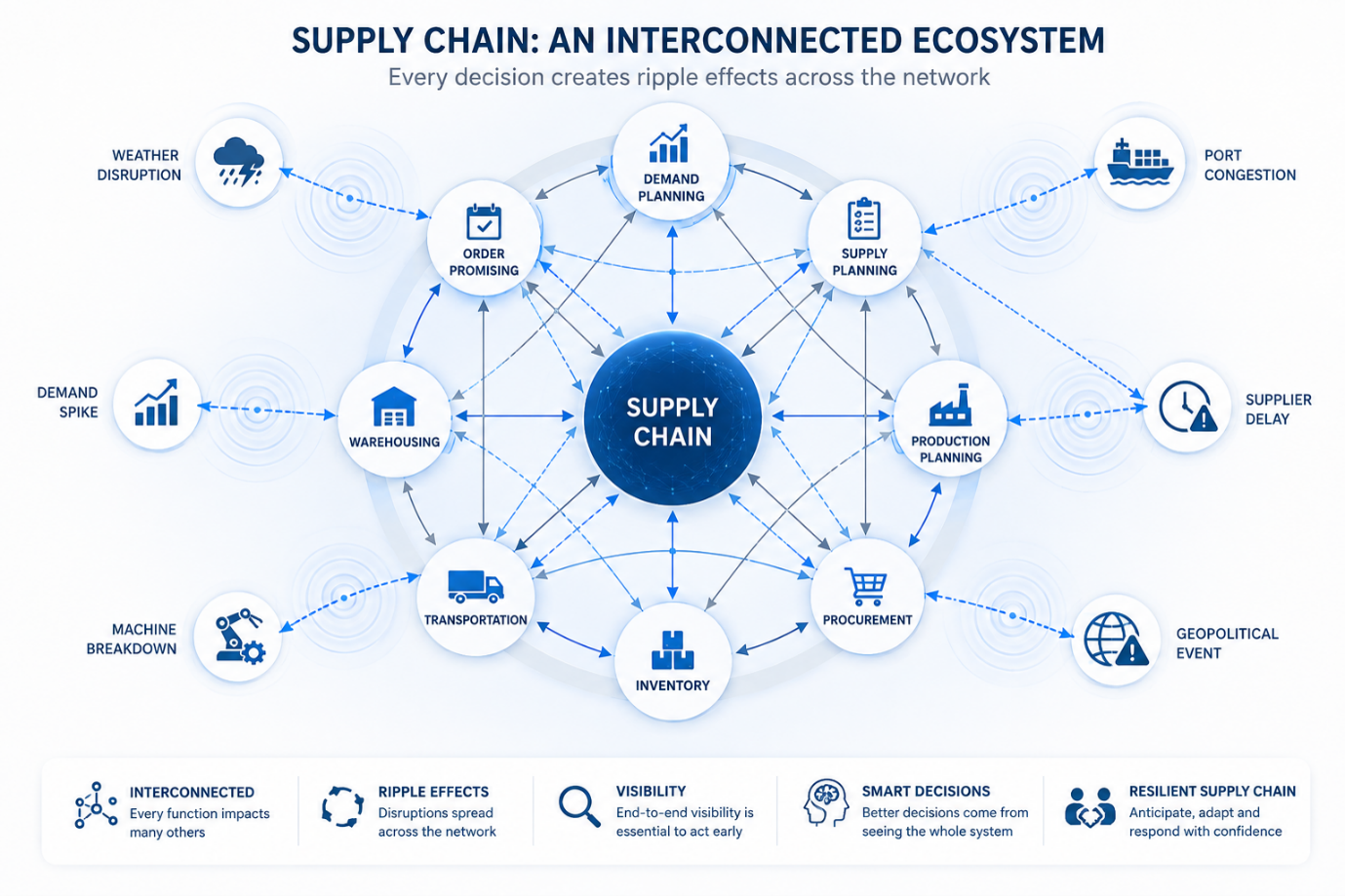
We often draw supply chains as neat, linear flowcharts.
- Demand Planning
- Supply Planning
- Production
- Logistics
- Customer
Reality couldn't be more different. A change in demand doesn't just affect planning. It reshapes production schedules.
- Changes raw material requirements
- Alters supplier commitments
- Impacts transportation plans
- Moves inventory across the network
- Changes customer delivery promises
And sometimes those revised customer promises influence tomorrow's demand all over again. That's why I've never really liked the term "supply chain."
A chain is linear. Modern supply chains aren't.
They're ecosystems. Every decision influences something else.
One Move. Many Outomes.
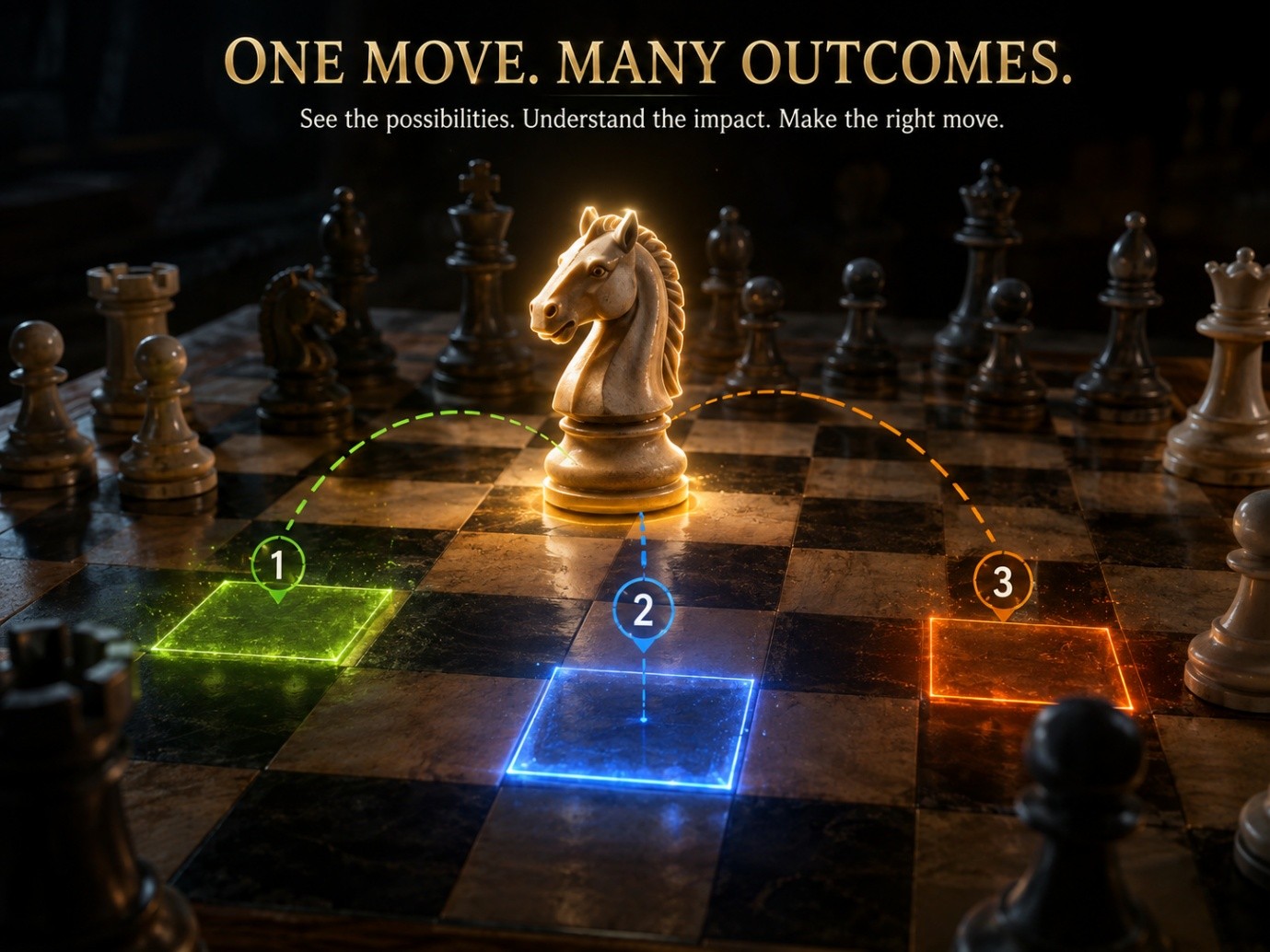
Over the years, I've noticed something about exceptional planners. When an exception occurs, they rarely ask, "How do I fix this?" Instead, they ask,
"If I change this... what else moves?"
That's a fundamentally different way of thinking. A delayed shipment isn't just a logistics problem. It can quickly become:
- An inventory problem
- A production problem
- A supplier collaboration problem
- An order promising problem
- A customer experience problem
The best planners don't simply react to what's directly in front of them. They mentally simulate the downstream consequences before making the first move.
Almost like a chess player. Or...A bus driver.
AI Orchestrator
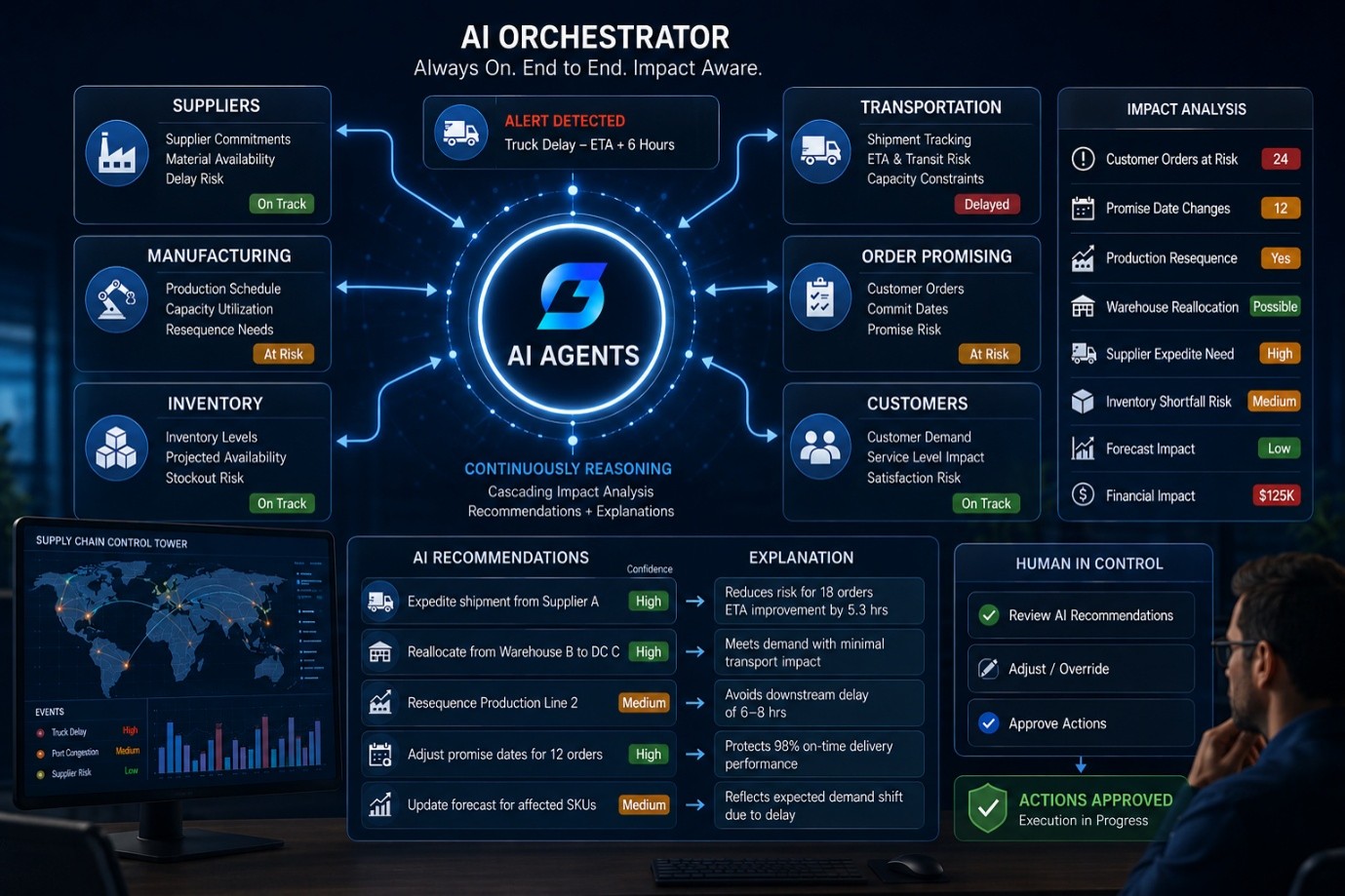
This is exactly why I find AI Agents so exciting. Not because I believe they'll replace planners. I don't. What excites me is their ability to continuously reason across connected systems in ways that are difficult for any individual to do all day, every day. As we've been developing our Enterprise AI Playbook, one idea keeps standing out to me: an always-on AI orchestrator.
Instead of waiting for planners to discover issues during scheduled planning cycles, AI continuously monitors the supply chain, reasons through downstream impacts, recommends actions, and explains why those actions matter—while keeping humans firmly in control of the final decision. Think about something as ordinary as a delayed truck. Most people see a transportation delay.
An experienced planner immediately starts asking:
- Which customer orders are now at risk?
- Should delivery promises change?
- Does production need to be resequenced?
- Can another warehouse fulfil the order instead?
- Should material be expedited from a supplier?
Now imagine software asking those questions every second. Not replacing the planner. Standing beside the planner. Connecting dots. Highlighting consequences. Suggesting options. That's where I believe AI creates its greatest value. Not by making decisions for us. But by helping us understand the system more completely.
A transportation delay doesn't have to remain a transportation problem. It can become a coordinated response across order promising, supplier collaboration, inventory planning, and forecasting—so the business responds as one connected system instead of a collection of isolated functions.
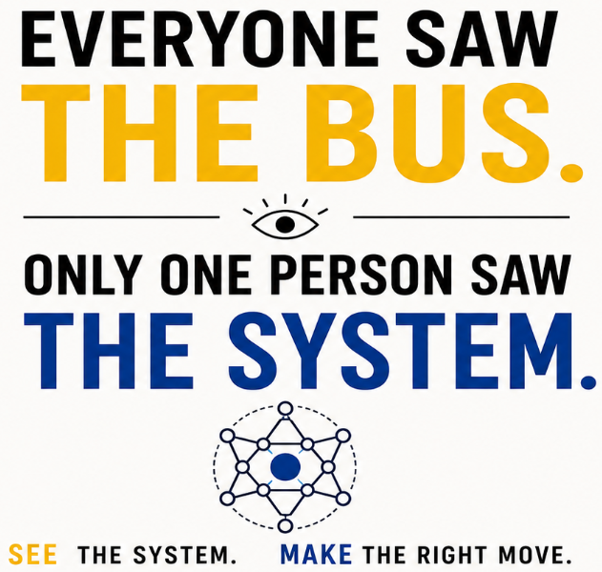
I still keep thinking about that school bus. To everyone watching, the driver looked wrong. In reality, he was the only person who understood the geometry of the entire vehicle. It made me wonder how often we do the same thing in business. How often do we judge someone else's decision simply because we can't yet see the system they're looking at?
Maybe that's what experience really is. Not having more answers. Having a better mental model. And perhaps that's the greatest opportunity AI gives us. Not replacing human judgment. Helping us see the system more clearly. Because great decisions aren't made by looking harder. They're made by seeing wider. They make sense only when you can see the whole system.
I'd love to hear your perspective.
Have you ever watched someone make a decision that looked completely wrong... only to realise later they were the only person who understood the whole system?
