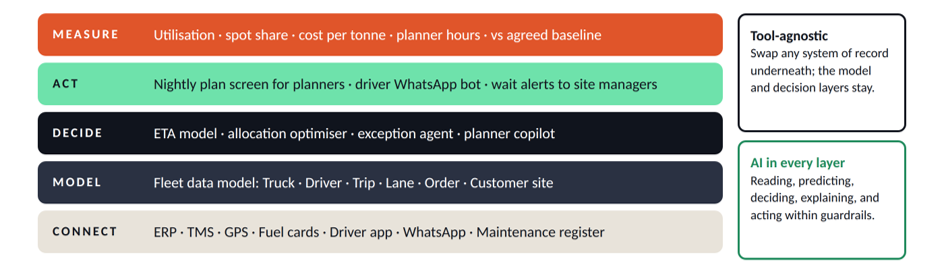
Figure 7. The Dedicated Fleet Planner: five layers, with AI in each and no system of record replaced.
At the bottom, the systems of record stay as they are. Above them, a fleet data model (trucks, drivers, trips, lanes, orders, customer sites) gives every system a shared language. The decision layer holds the ETA model, the optimizer, the exception agent and the copilot. The action layer is where people work: a nightly plan screen for planners, a WhatsApp bot that tells each driver tomorrow’s first load before they sleep, and alerts to site managers when a truck is about to wait more than two hours.
The build was the easy part. Adoption was the real work. In the first week of go-live, planners overrode four plans in ten. Arjun did not argue; he read every override reason. Half were constraints nobody had written down: a customer that accepts trucks only before noon, a driver whose village lies on the route. Each became a rule. By week four, overrides were below one in ten, and the planners had started calling it “our plan”. That is the only adoption metric that really matters.
Rule 4. Prove the value, then productize it

Figure 8. Twelve weeks on, measured against a baseline agreed with finance before the build (illustrative) after FDE walked into the dispatch room.
How the numbers were measured matters as much as the numbers. The baseline was agreed with finance before the build, and the same replay method that sized the problem proved the result. Value-driven delivery means the measure is defined before the solution, not reverse-engineered after it.
And Meera’s 6:10 a.m. messages? Mostly, they stopped.
Proof for one customer is where bespoke consulting stops. It is where the FDE model keeps going. A good FDE is deliberately over-fitted to the first customer and then disciplined about what goes back to product.


Figure 9. What moves into the product, what becomes configuration, and what is deleted.
When the same pattern showed up at other dedicated fleets, the work sorted itself into three buckets. The core (the fleet data model, the ETA model, the optimizer, the copilot) was reused as is. The configurable parts (cost terms, site windows, driver-hour policies) became settings, not code. The scaffolding (a custom import for a paper maintenance register, one-off scripts) was labelled and deleted.
That is the productization of solutions: every deployment makes the product better, and every new customer starts closer to value. It is also where AI enablement in every aspect becomes real. Not a chatbot bolted onto a screen, but AI inside each step: reading, predicting, deciding, explaining, and increasingly acting within guardrails the business sets.
SO WHAT · THE IMPLICATIONS
What supply chain leaders should do next
If value leaks at the decision, and an accountable builder can close the gap, then supply chain technology must be funded, staffed and measured differently. Five shifts follow, and every reader has a first move.
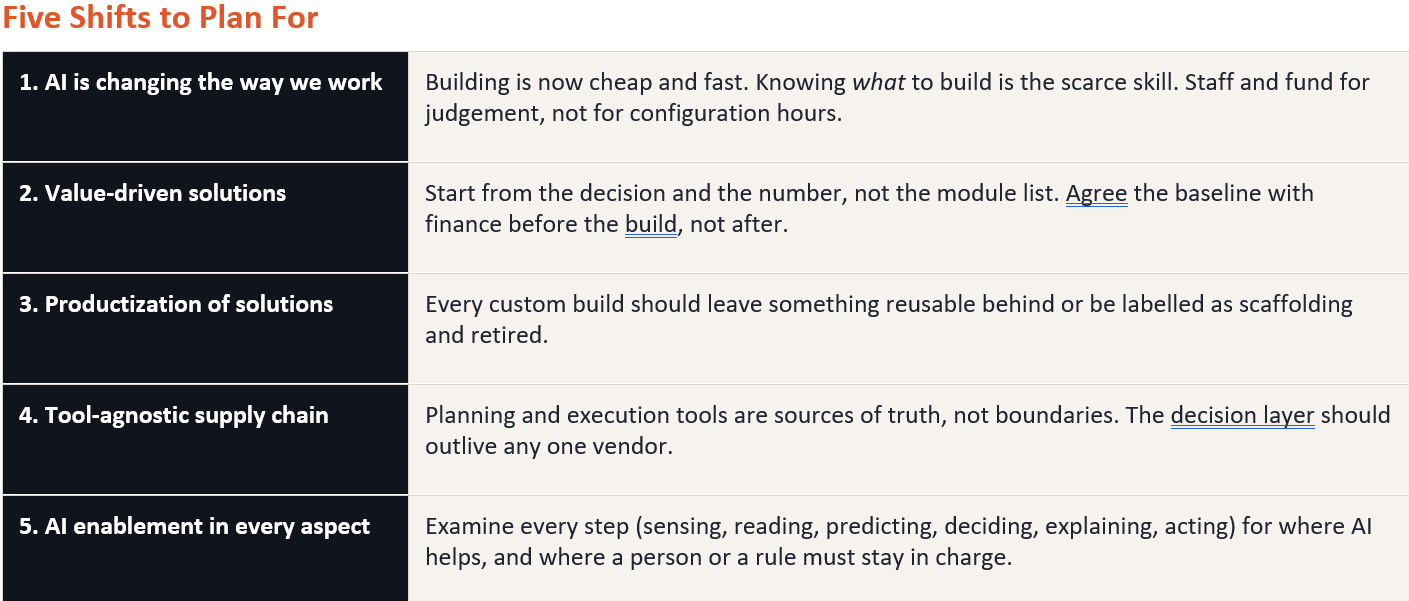
Table 2. Five shifts every supply chain leader should plan for.
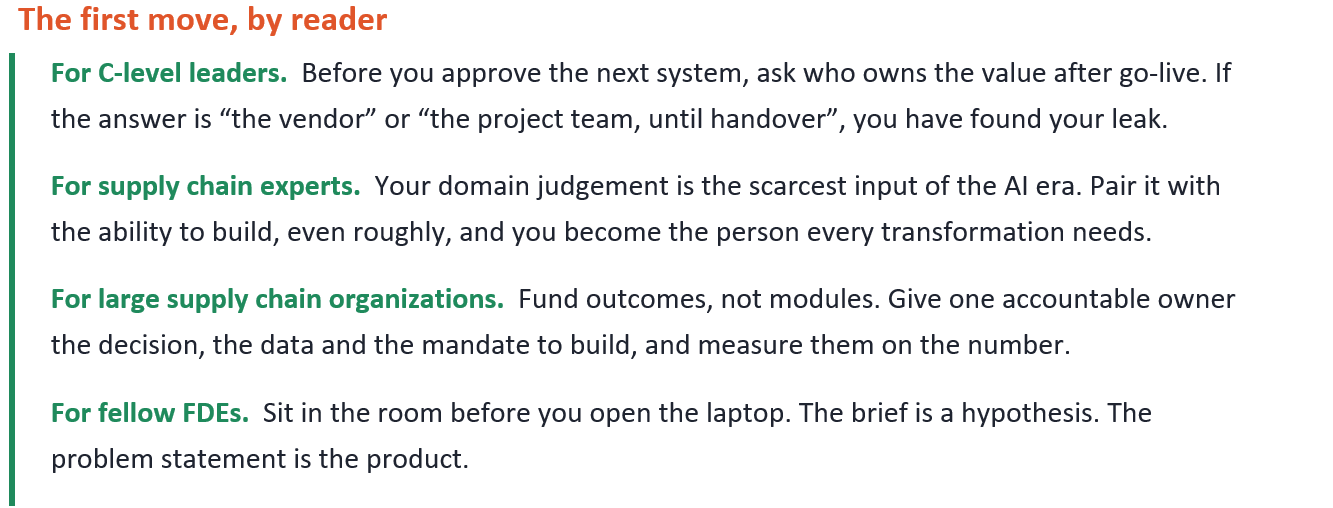
Table 2. Five shifts every supply chain leader should plan for.
TWELVE WEEKS LATER
I asked Meera what had changed. She did not mention the optimizer, or the AI.

That is the job of a Supply Chain FDE. Not more systems, but more value from the ones you already have, and a new product when nothing else will do.
Meera, Arjun, Suresh and the manufacturer are a composite drawn from dedicated-fleet engagements; names are changed and the figures in Figure 8 and the adoption section are illustrative.
Market references: Palantir on product versus forward deployed engineering; FDE postings growth from a Financial Times analysis of Indeed data, as reported by Fast Company (5 November 2025); Gartner survey of chief supply chain officers on AI ROI (August 2026).
