share
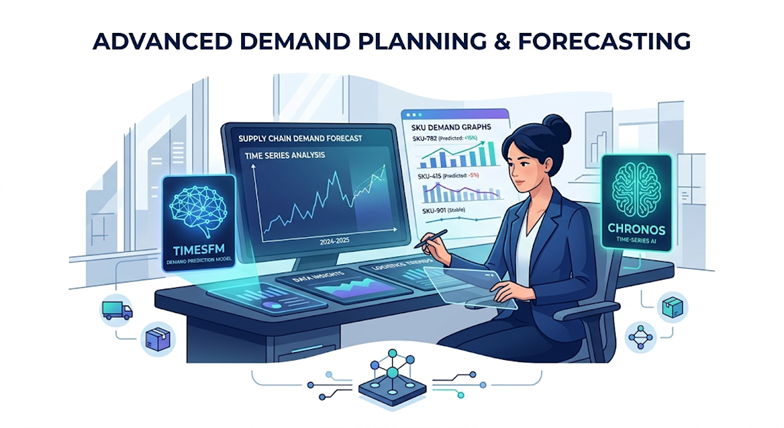
I’m not a developer. Yet recently, I built a working forecasting engine using AI—not just a prototype, but a system combining traditional statistical methods with modern AI-based time-series models. But the most important takeaway wasn’t that AI helped me build it.
It was realizing something far more critical: not all AI tools are good at the same things—and choosing the wrong one can cost weeks of effort. We’re entering a phase where AI models are beginning to specialize. Knowing which one to use is becoming a professional skill.
The Experiment: Building a Forecasting Engine Without Prior Hand-On
Modern Advanced Planning Systems (APS) come with strong statistical forecasting capabilities—ARIMA, exponential smoothing, moving averages. These methods are reliable, but often rigid and difficult to extend. I wanted to experiment with a more flexible setup:
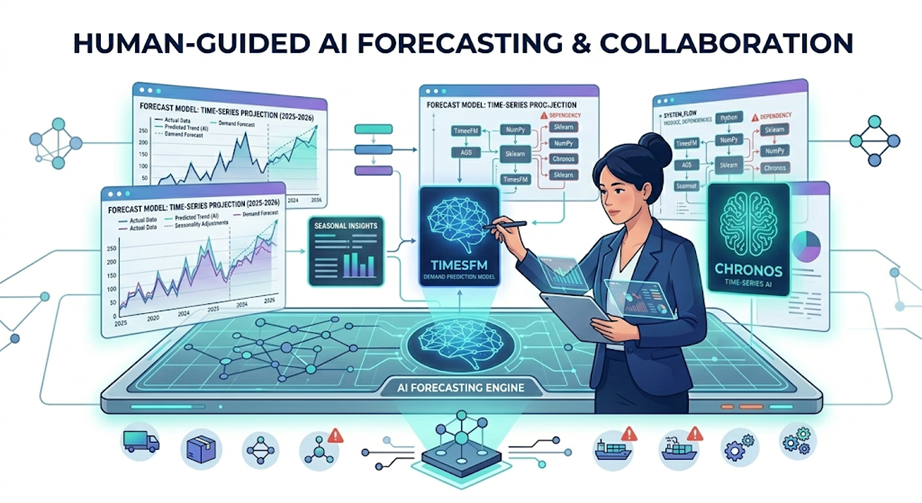
A forecasting engine combining:
- Traditional statistical models
- AI-native time-series models like TimesFM (Google) and Chronos (Amazon)
The goal wasn’t to build a product, but a tool I could trust and experiment with. Since I don’t have a coding background, I relied entirely on AI coding tools.
When “Any AI Will Work” Breaks Down
Like most people, I started with general-purpose tools such as ChatGPT and Gemini. The initial experience was impressive.
Within minutes, I had:
- A Python project structure
- Environment setup instructions
- Dependency lists
- Working forecasting logic
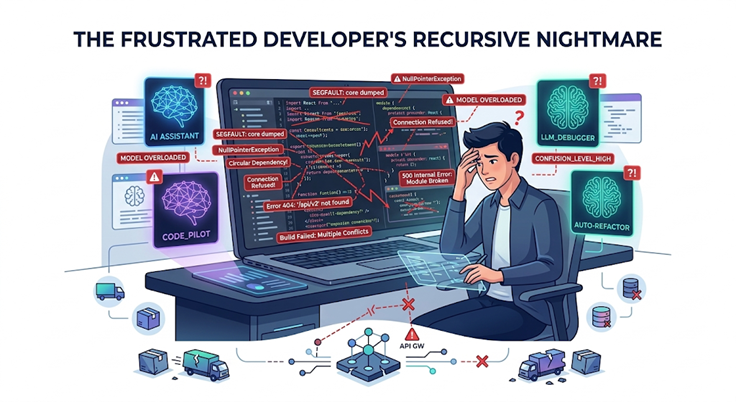
For someone without a development background, it felt almost magical. But magic doesn’t debug itself. As soon as I started running the code, errors surfaced continuously. Fixing one issue often introduced another. When I asked the AI to modify logic mid-session, it would fix one part while unintentionally breaking another. The codebase grew—but not necessarily in quality. Still, I was making progress. Until I tried to scale the system.
The Technical Wall
I wanted to integrate both TimesFM and Chronos into the same engine. That’s when the real complexity appeared.
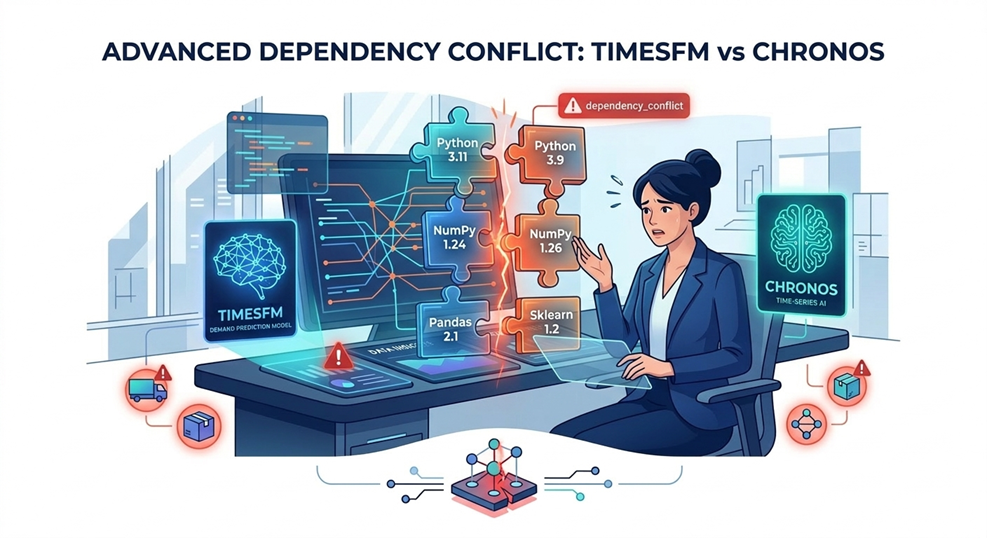
The models required conflicting dependencies—different versions of libraries like NumPy and other packages. Resolving this typically requires deep environment management and testing combinations—something experienced developers handle routinely.
The AI tools I was using could suggest solutions, but they couldn’t validate them in a real runtime environment. Every solution remained theoretical. After weeks of attempts, I gave up on integrating Chronos. It felt like a limitation that required a professional developer.
The Breakthrough
Then I tried one more experiment. I uploaded the entire codebase into Claude and asked it to integrate Chronos alongside TimesFM. No complex prompt. Just the code. On the first attempt, it worked. But what stood out even more was how the code evolved.
Without being asked, Claude:
- Refactored large scripts into modular functions
- Improved readability
- Reorganized the project structure
What had been a growing, tangled script became a clean, maintainable codebase. It didn’t just solve the problem—it understood the architecture behind it.
From Working to Scalable
With the engine functional, the next challenge was performance. Running forecasts across a large SKU base on a local machine was slow and inefficient. Claude identified the bottleneck and suggested migrating execution to Google Colab. It modified the code accordingly and guided the transition to a cloud-based environment.
The result:
A scalable, modular forecasting engine capable of running large-scale experiments—built entirely with AI assistance. Without writing a single line of code myself.
The Real Lesson: AI Is Becoming Specialized
For the past two years, the conversation around AI has focused heavily on prompt engineering. If the output wasn’t good, the assumption was simple: improve the prompt. That mindset is becoming outdated. Prompting is quickly turning into a baseline skill—like using a search engine. The real differentiator now is something else: Knowing which AI model to use for which task.
Different AI systems are developing distinct strengths. Think of it this way: a skilled plumber can technically do gardening—but you wouldn’t hire one to landscape your garden. The result might be functional, but not optimal.
Similarly, AI tools are becoming specialized instruments:
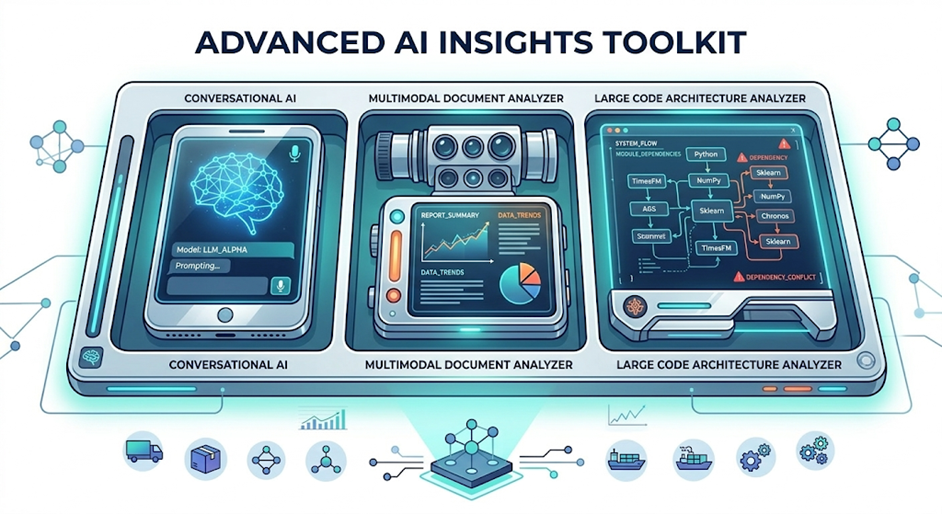
- ChatGPT: Strong in conversational reasoning and rapid prototyping. Its ecosystem (Whisper, Projects, Custom GPTs) makes it highly versatile.
- Gemini: Excels in multimodal workflows and deep integration with Google’s ecosystem—documents, spreadsheets, and data.
- Claude: Particularly strong at reasoning across large codebases and understanding structural intent, not just syntax.
None of these tools is universally better. They are different tools for different jobs. (These observations are based on personal experience—the landscape continues to evolve rapidly.)
Why This Matters for Supply Chain Professionals
For supply chain, operations, and analytics professionals, this shift is significant. Historically, building tools required close collaboration with developers and product teams. Today, AI is lowering that barrier. Planners, analysts, and domain experts can increasingly prototype and build their own solutions. But there’s a catch. AI can generate code—but it cannot replace domain expertise. Understanding demand patterns, supply variability, business constraints, and data nuances is still critical. AI acts as the instrument. Domain knowledge shapes the solution.
The Shift Happening Right Now
A year ago, the key question was: Can AI do this at all?
Today, the question is becoming: Which AI does this best?
That shift is profound. As AI capabilities diversify, professionals who understand these differences will move faster—and build better solutions—than those who treat all AI tools as interchangeable.
The democratization of AI is real. Building a forecasting engine without technical expertise would have been unthinkable a few years ago. But democratization does not mean uniformity. Capabilities differ—and those differences matter.
Final Thought
We are moving from a world where any AI will do to one where the right AI makes all the difference.
Choosing wisely is no longer optional. It’s a core skill.
