Consider a common scenario.
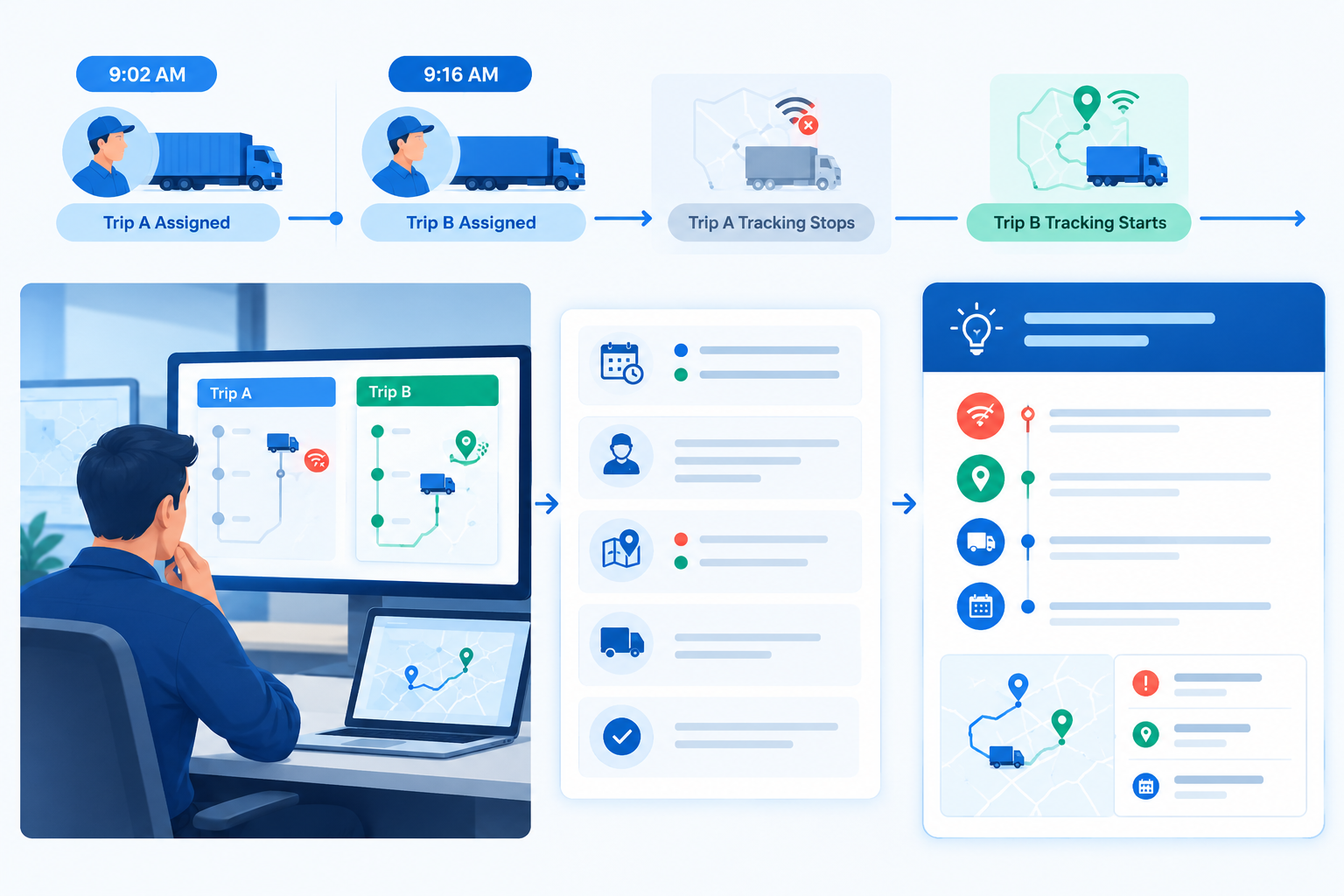
A driver is assigned to Trip A at 9:02 AM. Fourteen minutes later, the same driver is assigned to Trip B. Tracking for Trip A stops. Tracking for Trip B begins. Trip A remains open on the board with no pings and no obvious reason.
A conventional tracking system reports the symptom: tracking stopped at 9:16 AM.
That leaves the operator with the actual work still to do. They open the trip record. They check the driver's assignment history. They cross-reference ping timestamps against both trips. They confirm the driver is moving, just under a different trip. They decide whether Trip A needs manual intervention or whether the system will resolve it on its own.
Five minutes of investigation to answer a question the system already had the data to answer.
Trukr's approach is to connect those events and explain the sequence. The system can identify the underlying cause, establish exactly when the first trip stopped receiving pings, identify when tracking resumed under the subsequent trip, and assemble those facts into a single coherent narrative:
Tracking on Trip A stopped at 9:16 AM because the assigned driver was reassigned to Trip B at 9:16 AM. The driver is actively tracking under Trip B. Trip A has 2 remaining stops and is scheduled for completion next day at 11:16 AM. Action required.
The result is not just visibility. It is explainability.
The Hidden Cost of Manual Reconstruction
